Routines that fit the day
Rainy Manhattan, office focus
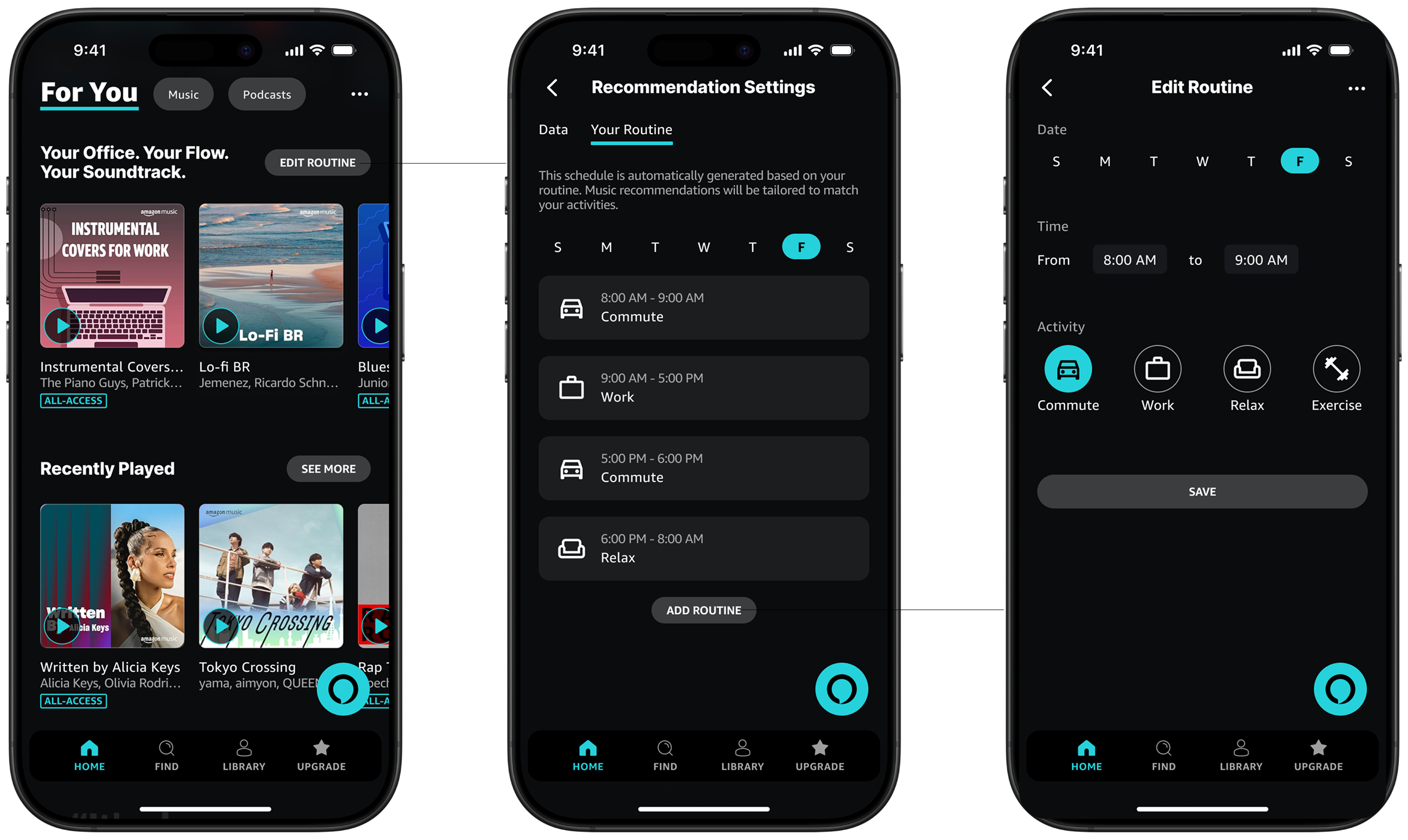
Contextual rows adapt to location and schedule: commute playlists for rainy mornings, focus tracks for the workday.
For Ü
Problem
Retention depends on whether casual listeners feel the service fits into their lives. When For You recommendations miss the mark, Amazon Music becomes interchangeable with any other streaming app.
Design a customer experience strategy that improves retention across tiered offerings and makes personalization feel human, not algorithmic.
Among lapsed casual users, 29% cited poor recommendations as a reason for leaving.
Among lapsed users, 75% felt Spotify, Apple Music, or YouTube Music offered stronger personalization.
Active and passive casual listeners form the largest segment, making them the greatest opportunity for improving retention.
Research
We surveyed users and mapped behaviors to two personas. Both stream casually, but they relate to music differently.
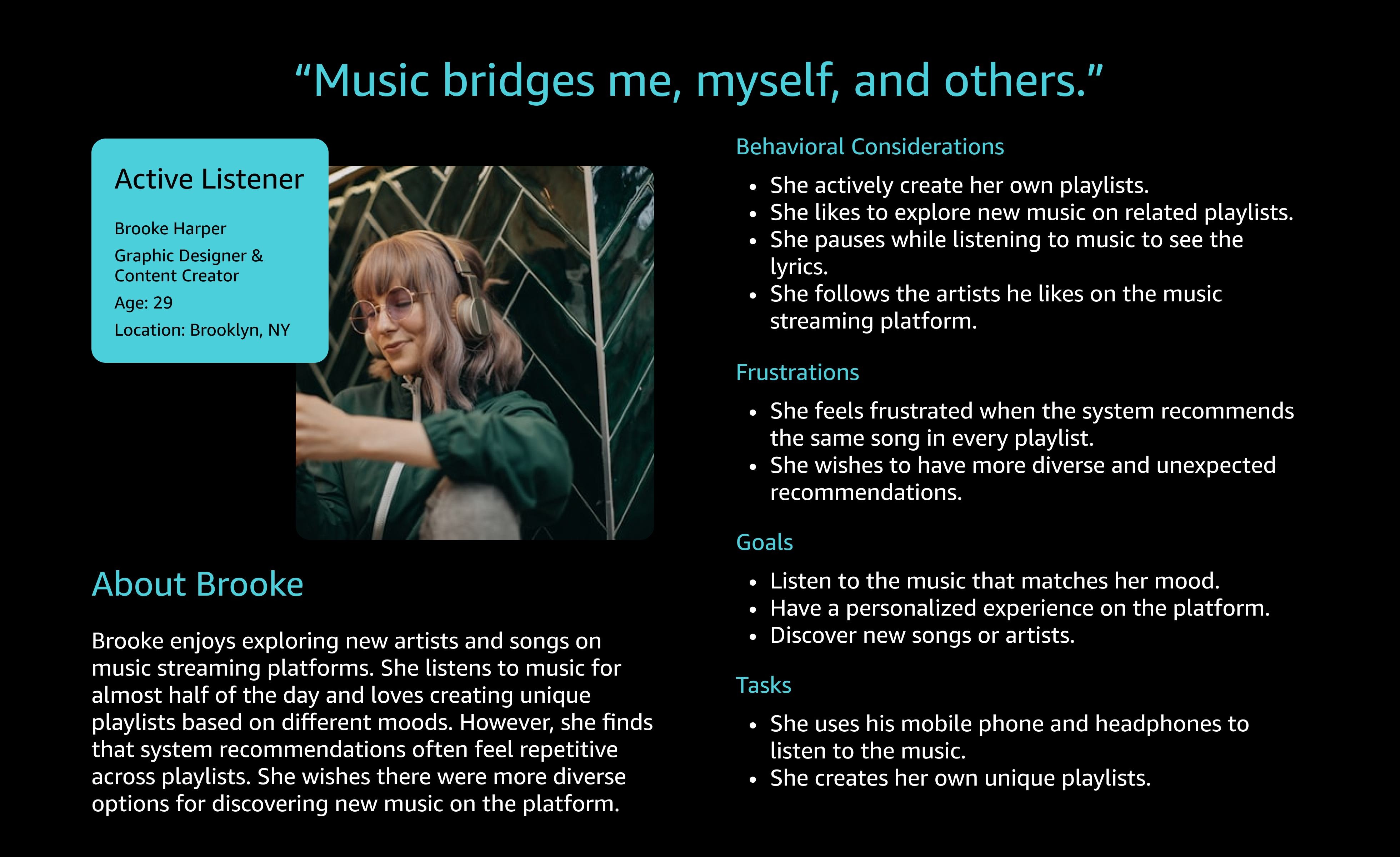
Active Listener
“Music bridges me, myself, and others.”
Wants recommendations that reflect taste, mood, and identity, not just play history.
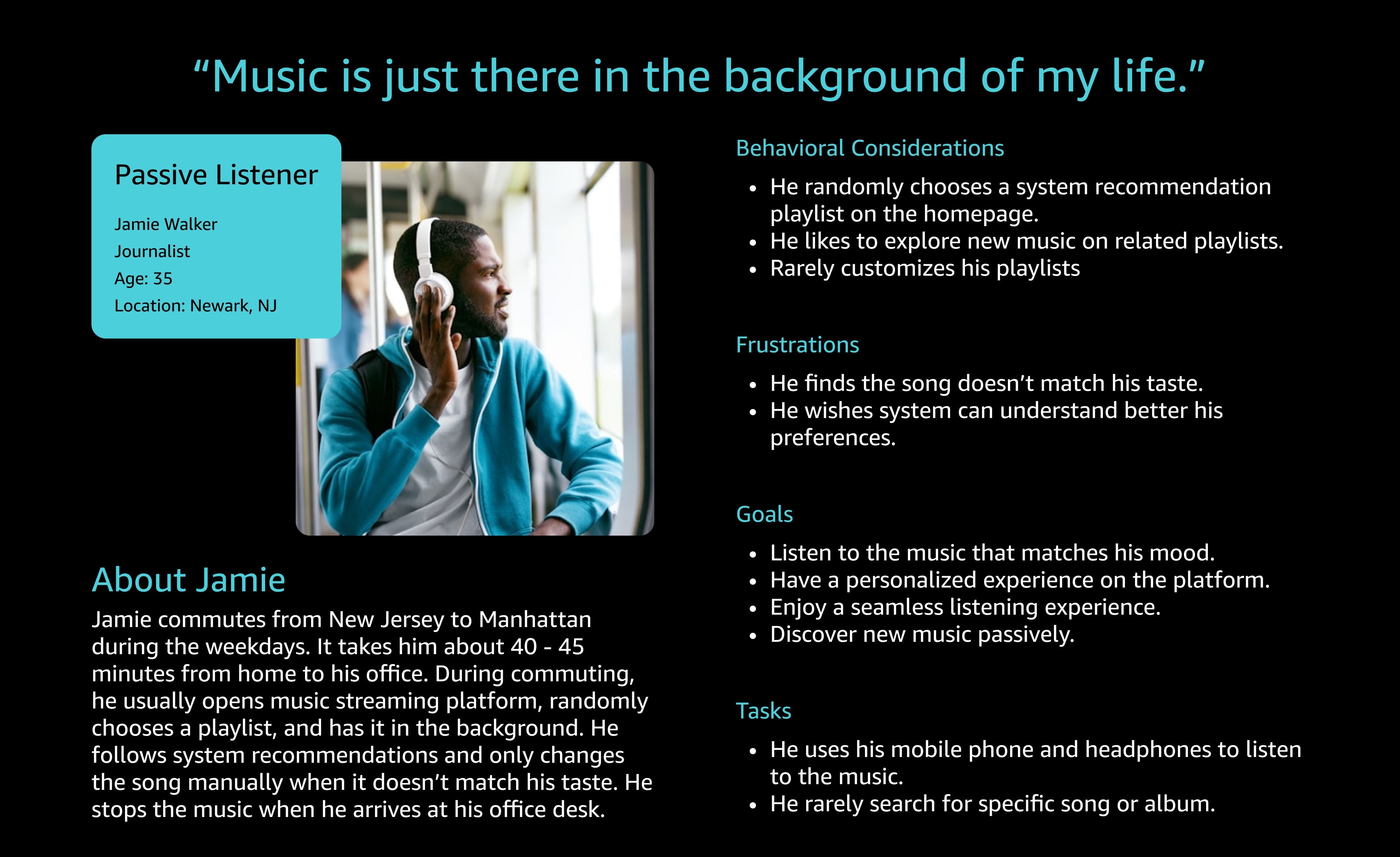
Passive Listener
“Music is just there in the background of my life.”
Needs context-matched playlists without searching or building libraries.
For You rows that repeat artists or ignore recent activity feel like guessing.
Shopping, reading, and viewing signals rarely surface in Music in ways users trust.
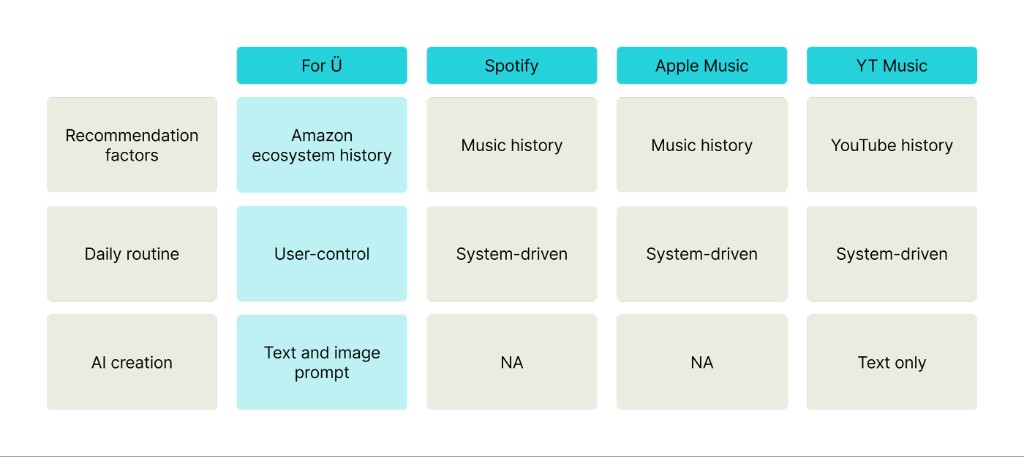
Spotify and Apple Music offer clearer taste levers; Amazon has the data but not the experience.
Strategy
For Ü connects Amazon's ecosystem to everyday listening: cross-service recommendations users can trace to their data, routine-based playlists, and Maestro AI for frictionless creation.
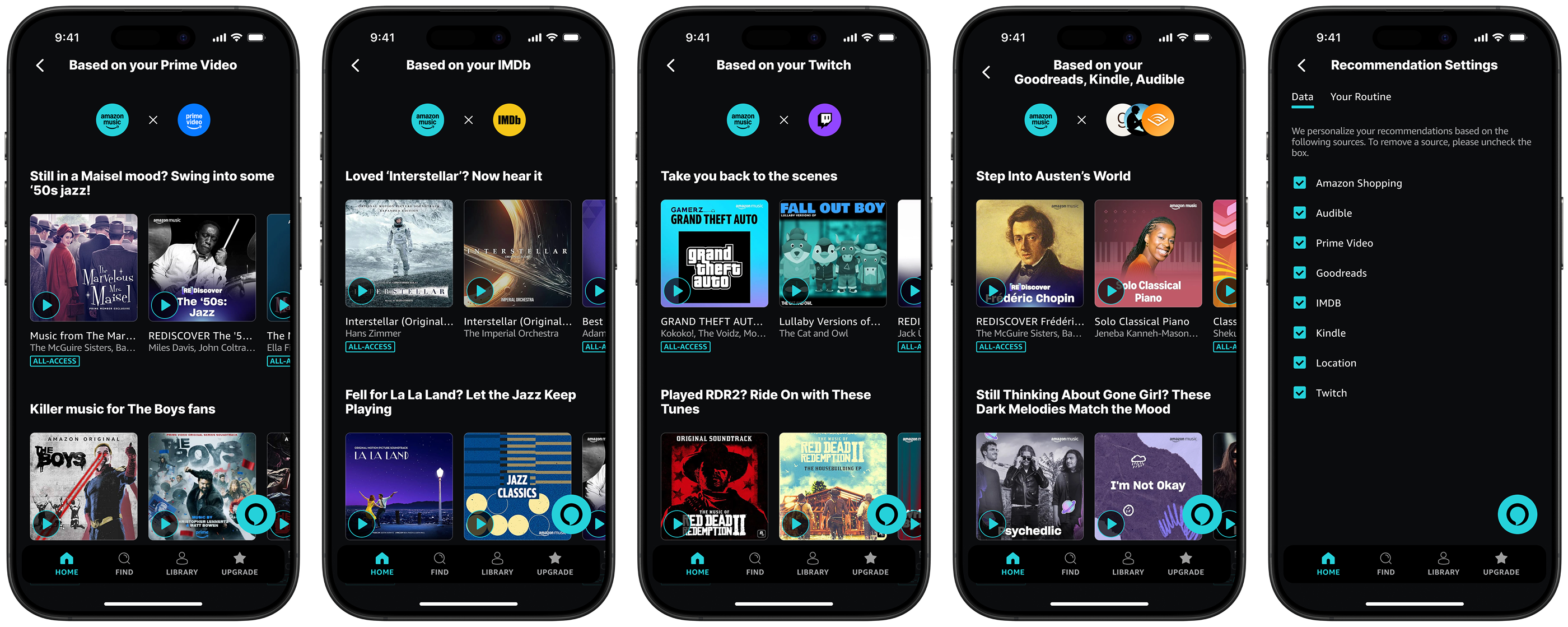
Users choose which Amazon services feed recommendations and can adjust anytime.
Playlists respond to mood, weather, and daily routines, not just listening history.
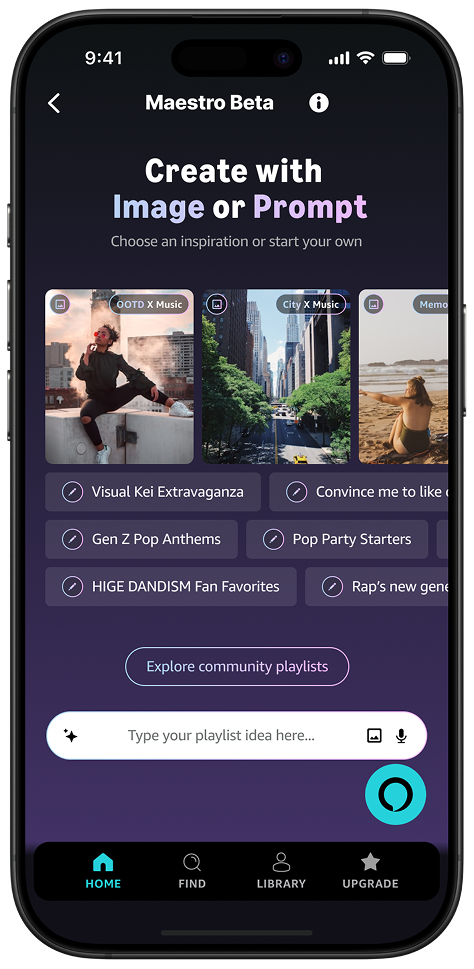
Maestro Beta generates tracklists from text or image prompts; users control saving and refining.
Design Pillar 01
Amazon already has signals about what users read, watch, and shop for. With explicit consent, For Ü makes selected signals visible inside Music and explains how they shape recommendations.
Design Pillar 02
Passive listeners open Music because the moment needs a soundtrack. For Ü organizes the For You tab around daily context: weather, commute, work rhythm, and emotional cues.
Routines that fit the day
Contextual rows adapt to location and schedule: commute playlists for rainy mornings, focus tracks for the workday.
Design Pillar 03
Active listeners want to shape their sound without building playlists track by track. Maestro Beta accepts text or image prompts and keeps final control with the listener.
Create with prompt or image
Users pick an inspiration card or type a prompt (city walk, mood, genre) to start generation.
Impact
We interviewed five participants to evaluate the design's retention potential.
“I would return to the app to find soundtracks from shows I've recently watched.”
“It's cool to create playlists with AI. I would like to try different photos.”
“I like being able to view and edit my routine because I usually choose music based on the situation.”
“Sometimes, images say what I can't put into words.”
Conclusion
For Ü treats personalization as trust: show where recommendations come from, match music to daily rhythms, and offer AI creation without removing agency.
This was a four-week concept project. Next steps would include testing whether recommendation settings feel transparent, validating routine-based triggers with listening data, and aligning the Maestro concept with production saving flows.