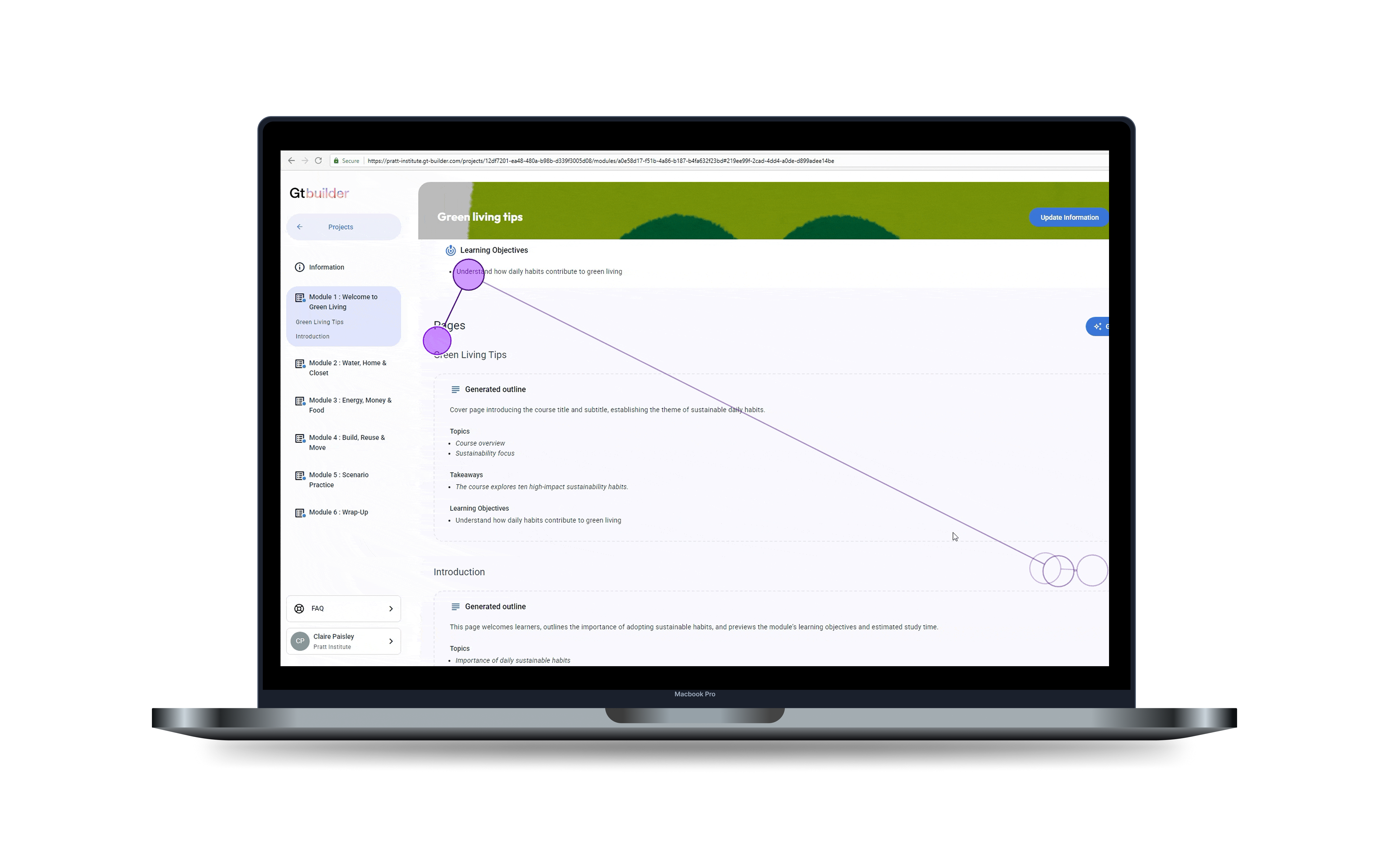
Participants hesitate and move back and forth throughout the workflow
Participants frequently hesitate before taking action, revisit the same input fields, and move back and forth between sections. Some skip steps entirely. These patterns appear throughout the flow, from creating a project to generating content.
Input purpose
Participants repeatedly returned to input fields.
Action outcome
Six of eight participants hesitated before regenerating content because they were unsure how it would affect their existing work.
System status
Participants were unsure whether their work was saved.
Research
Understanding why users feel uncertain when interacting with an AI system
Eight eye-tracking and RTA sessions
I conducted eight in-person eye-tracking sessions with first-time users and paired each with a retrospective think-aloud (RTA) to understand how they made decisions and where confusion occurred during tasks.
System Usability Scale score: 61.3
Participants completed the System Usability Scale after each session. The product received a SUS score of 61.3, suggesting that participants did not feel fully comfortable using it.
The same patterns appeared in Hotjar
Hotjar revealed the same interaction patterns, showing where existing users hesitated, retried actions, or tried to figure out what to do next.
Core Insight
System state is not visible to participants
The AI Course Builder generates a draft from user input, while detailed editing happens later in the CMS. Across the workflow, participants encountered the same underlying problem: the system did not make its state visible. They could not tell what to provide, how their input would be used, whether work had been saved, or what an action would change. As a result, they relied on trial and error.
1Step 01Set up course input
2Step 02Generate course outline
3Step 03Review and refine the course outline
4Step 04Generate course content
5Step 05Review and refine content
Step 01
Confusion Between Description and Learning Objectives Fields
Participants struggled to differentiate between the “Description” and “Learning Objectives” fields. In gaze replay, users repeatedly copied text between the two, indicating uncertainty about what each field required. This hesitation slowed down their progress.
Design Decision 01
Set clear expectations
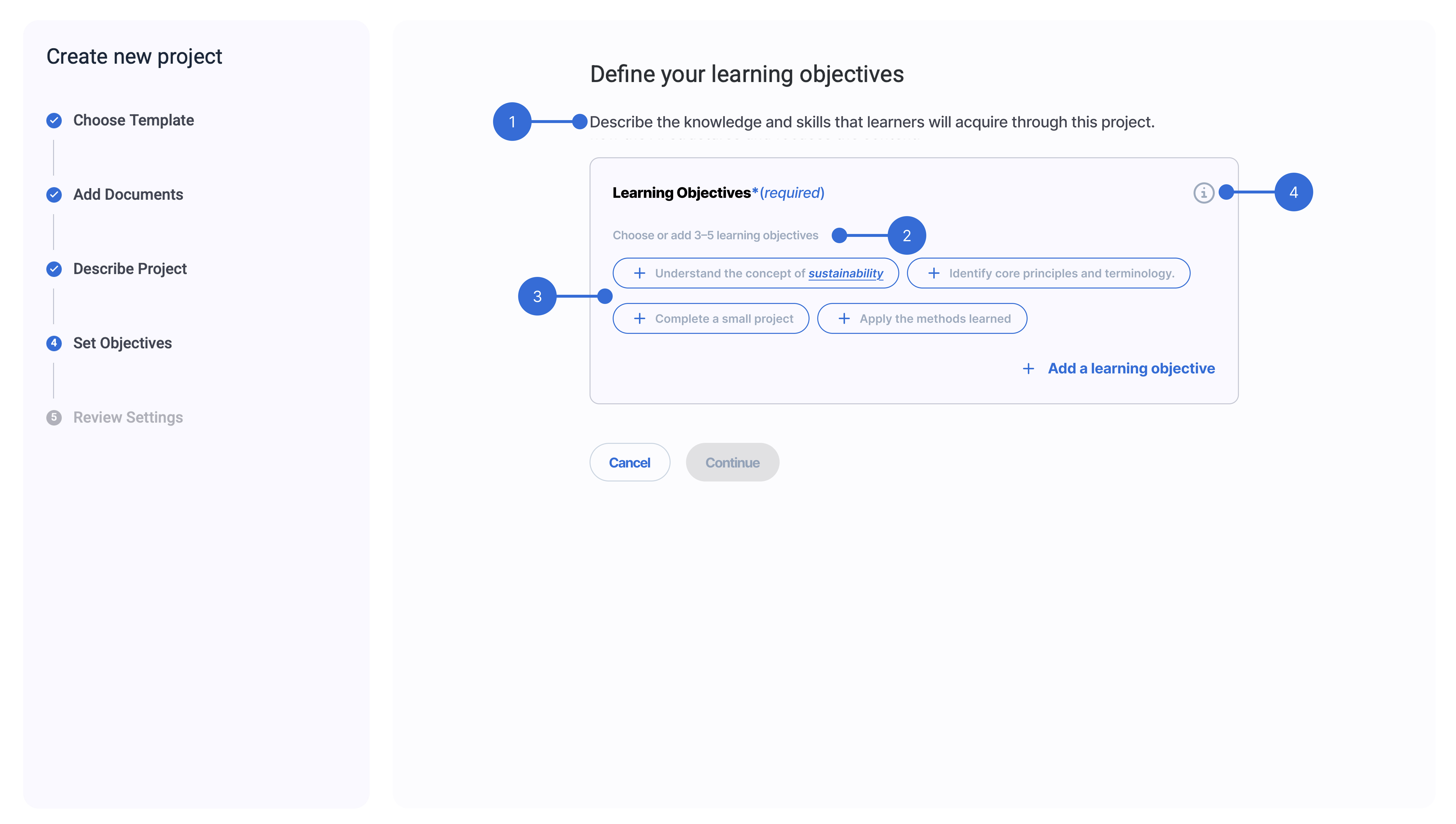
It’s like being asked to draw something without knowing what is expected. Most people do not feel stuck because they lack creativity, but because they do not know what to draw. The existing AI Course Builder creates a similar experience: participants are given input fields, but it is unclear what information they should provide or how it will be used.
To address this, I added four types of guidance to help participants understand each field and reduce cognitive load.
01
Purpose
What are users filling out right now?
02
Length guidance
How much should they write?
03
Content guidance
What information belongs here?
04
AI transparency
How will this affect the generated course?
Design Decision 02
Support safe iteration
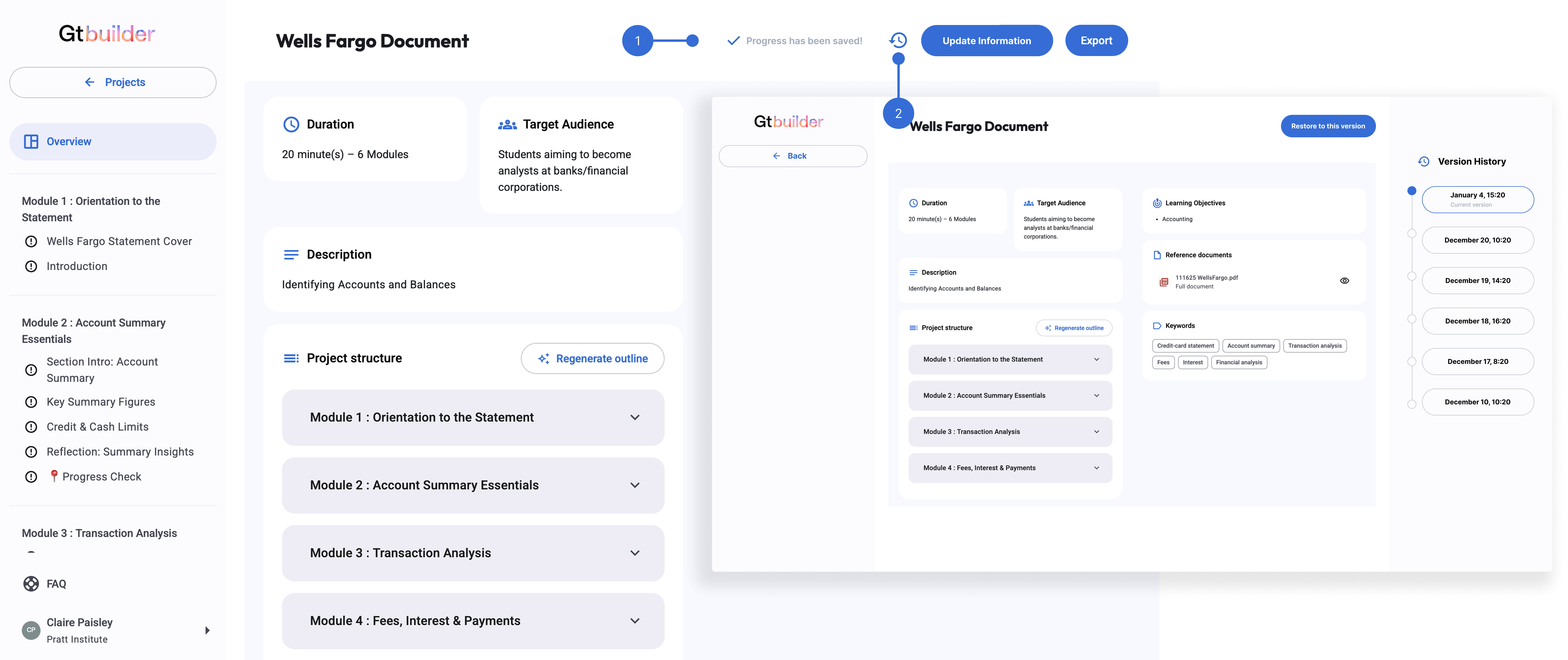
Participants’ search for a save option and hesitation to regenerate content signaled a need to preserve existing work. Because AI is non-deterministic, the same input does not guarantee the same output, making previous content important as a reference.
I made saved progress visible through notifications and added version history so users could return to an earlier point before taking action.
01
System status
Make saved progress and current status visible.
02
Version history
Let users return to an earlier version.
Impact
“We were taking notes the whole time. This was really helpful.”
Conclusion
From usability issues to system visibility
Triangulating multiple data sources helped validate consistent patterns in user behavior. By combining eye-tracking, RTA, and behavioral data, I identified the underlying reasons for hesitation and confusion rather than relying on a single signal. This shifted the focus from isolated usability issues to the broader problem of system visibility.
Testing was conducted in isolation without the full CMS context, which may have influenced how participants behaved during the study. Future work would validate these findings in a CMS-integrated environment and explore how different interaction models support both generation and editing.